100 Years of Rotary in WA
Celebrating 100 Years of Rotary in Western Australia (1926–2026)
Introduction: The Dawn of Rotary in WA
On the breezy, sunlit afternoon of Wednesday, 1 September 1926, a distinguished group of Perth's foremost business leaders, civic organisers, and professional visionaries convened in a private dining room at the historic King Edward Hotel on Hay Street. The atmosphere within the room was electric with purpose, expectation, and a shared ambition for civic renewal. Perth in 1926 was a rapidly transforming state capital—a city emerging from the shadow of the First World War, expanding its tramways and riverfront infrastructure, and actively seeking fresh mechanisms for collective social and economic progress.
These pioneer leaders met to explore an innovative organisational philosophy that had originated two decades earlier in Chicago under the leadership of attorney Paul P. Harris: the radical idea of bringing together leaders from diverse vocations to cultivate unselfish fellowship, promote uncompromising ethical standards in commerce and industry, and channel private success into structured public service.
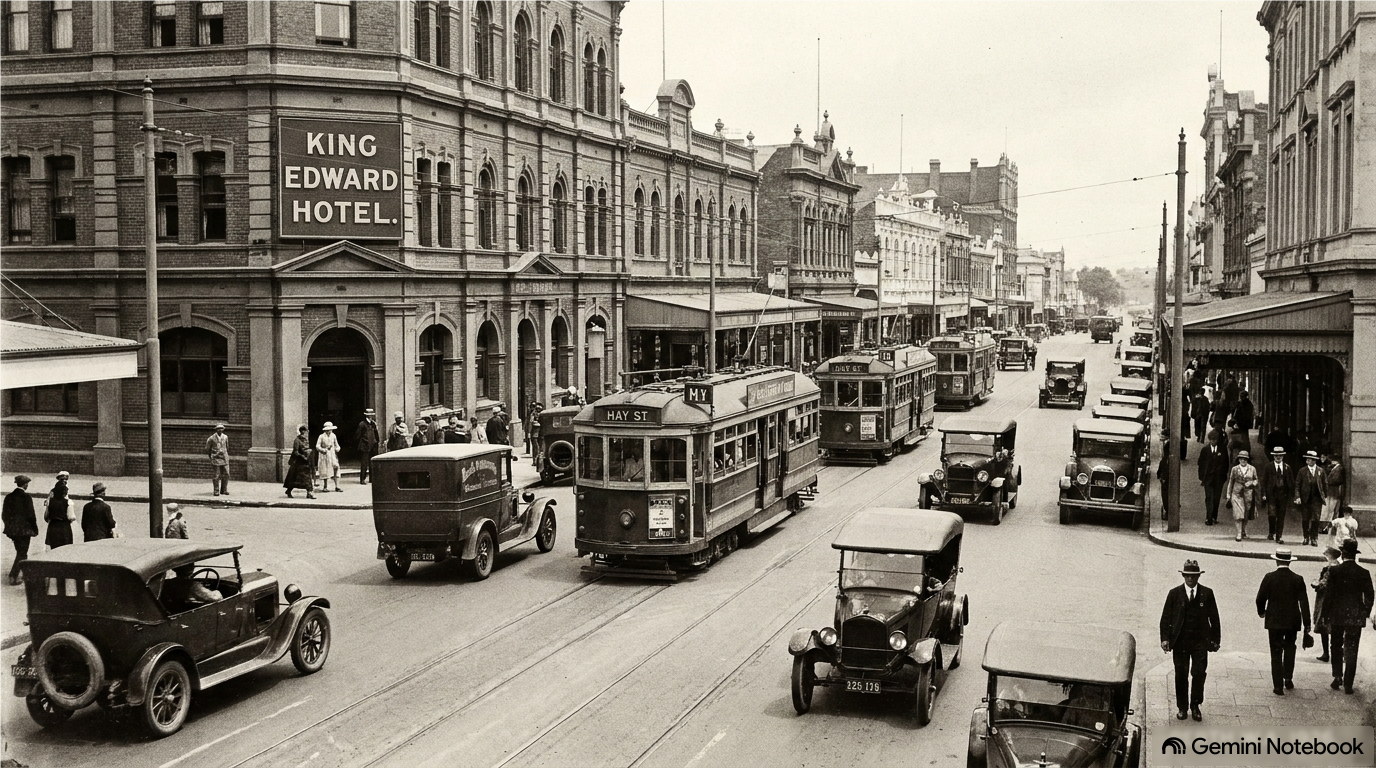
That seminal gathering marked the official dawn of the Rotary movement in Western Australia. Following several months of diligent organisational groundwork, constitutional drafting, and weekly fellowship dinners, the Rotary Club of Perth was formally chartered on 2 April 1927. As the pioneer club of the state, Perth Rotary established a robust foundational framework rooted firmly in Rotary's global motto, Service Above Self. From those initial handshakes over lunch in the dining room of the King Edward Hotel grew a humanitarian impulse that would spread across the vast, 2.5-million-square-kilometre expanse of Western Australia—from metropolitan riverbanks to rugged goldfield camps, timber milling towns, coastal ports, and agricultural outposts.
The early meetings embodied the classic Rotary custom of 'rotating' meeting locations among members' respective business premises—a practice engineered specifically to deepen vocational understanding, cross-industry transparency, and mutual professional trust. These early business leaders recognised that the rapid post-war expansion of Western Australia required far more than government policy and commercial enterprise; it demanded a vibrant, volunteer-driven social capital capable of constructing hospitals, funding youth education, creating public parklands, and extending a compassionate safety net to vulnerable citizens. The seeds planted at the King Edward Hotel in 1926 were destined to flourish into a statewide network of civic engagement that would touch millions of lives over the following century.
As Western Australia navigated the late 1920s, Perth Rotarians quickly established themselves as key advisors to municipal authorities, championing early urban planning initiatives, advocating for public health improvements, and organising social support networks during periods of economic hardship. The enthusiasm generated by the Perth club demonstrated that Western Australians were eager to embrace a structured framework for community service, setting the stage for an unprecedented wave of regional expansion across the state.
Chapter One
The Pioneers (1926–1940s)
Founding the Perth Club and Establishing the Early Ethos
The successful chartering of the Rotary Club of Perth in 1927 established a vibrant template for civic organisation across Western Australia. The early ethos of Rotary in Perth was characterised by a potent blend of structured fellowship, strict vocational ethics, and pragmatic local philanthropy. Members gathered weekly for mid-day luncheons—initially costing two shillings and sixpence—where fine systems, lighthearted camaraderie, and intellectual presentations by prominent guest speakers served to raise vital funds for local charitable causes. Social gatherings, theatre evenings, and family picnics actively involved Rotarians' spouses and children, laying the ground for complementary community support structures such as Inner Wheel.
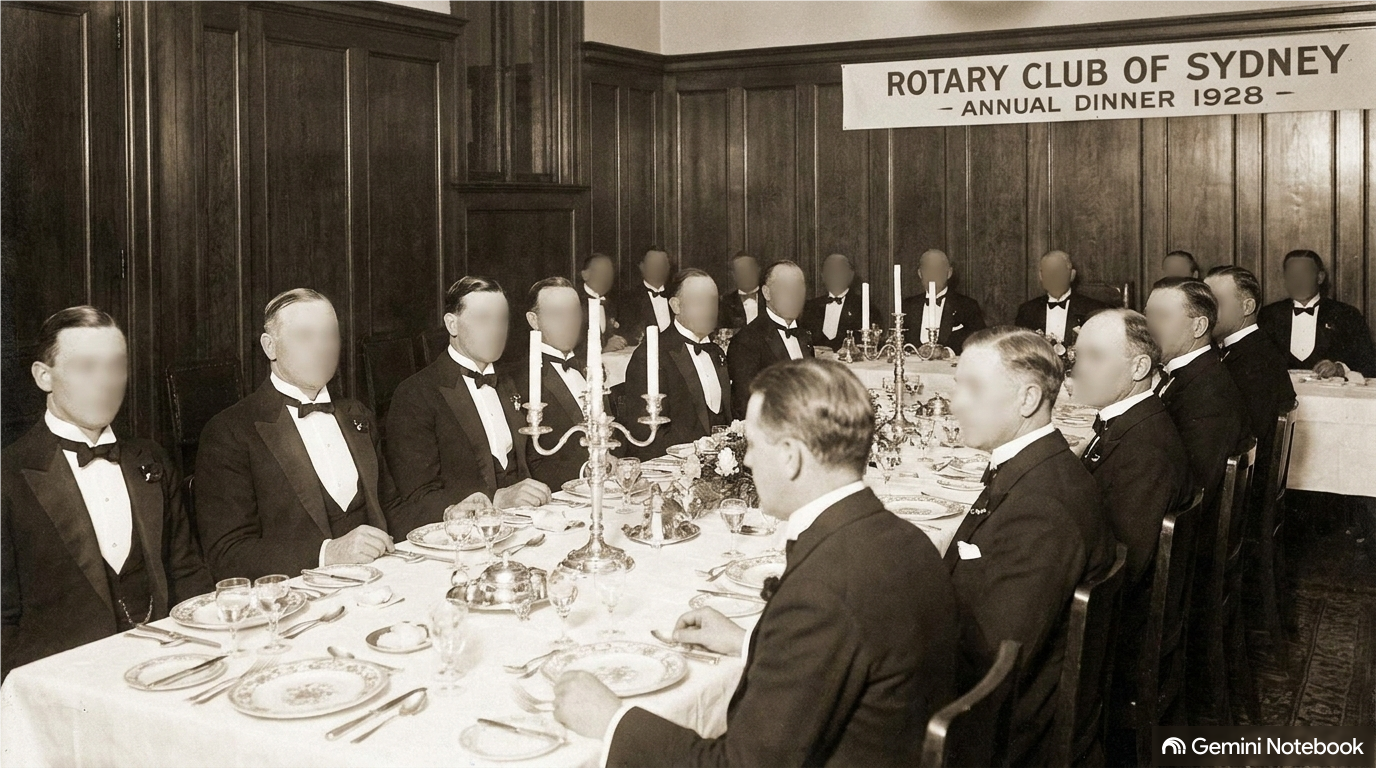
During the late 1920s and early 1930s, the Rotary Club of Perth took on ambitious local projects. Rotarians recognised that the state's rapid growth was creating significant gaps in social infrastructure, particularly for children and elderly residents. Members personally financed and built playgrounds, organised annual seaside holidays for underprivileged children from the Wheatbelt and Goldfields, and established vocational mentorship programmes for young men navigating the tumultuous economic climate of the interwar era.
Regional Expansion Across the Western Australian Frontier
As the benefits of Rotary fellowship became strikingly evident in Perth, the pioneer club eagerly assumed the responsibility of sponsoring new clubs in emerging urban and regional centres. The historic port city of Fremantle was the first to answer the call, receiving its official charter in 1928. Fremantle Rotarians immediately directed their energies toward maritime welfare, supporting destitute seamen, improving port worker amenities, and funding local youth clubs.
Although the onset of the Great Depression in 1929 and the subsequent outbreak of World War II in 1939 temporarily constrained financial resources, Rotary's core ethos of service resonated even more deeply during these times of crisis. As regional industries expanded, Rotary took firm root in key regional economic hubs across the state. Growth accelerated dramatically with the chartering of the Rotary Club of Bunbury in 1939, establishing a vital foothold in the South West timber and agricultural region. The fertile Wheatbelt heartland followed suit with the chartering of Northam in 1946, while the eastern goldfields forged a powerful presence with the chartering of Kalgoorlie-Boulder in 1947. Rapid suburban growth south of the Swan River led to the formation of the Rotary Club of Victoria Park in 1948.
The year 1949 marked an unprecedented post-war charter boom in Western Australia. Four new clubs were chartered in rapid succession: Subiaco, Geraldton, Mt Lawley, and Swan Districts. Subiaco Rotarians, sponsored by the Perth club, exemplified the era's hands-on work ethic by raising funds for infant health centres and constructing senior citizens' amenities. In Geraldton, Rotarians addressed the isolation of the Mid West coastline by funding emergency ambulance equipment and supporting regional fishing families. Meanwhile, the Swan Districts and Mt Lawley clubs mobilised community support for migrant settlement programmes and local hospital equipment.
Chapter Two
Building the State (1950s–1970s)
The Post-War Boom and the Creation of District 34
By the early 1950s, Western Australia was undergoing a dramatic economic and demographic transformation. Post-war migration, industrial developments at Kwinana, expanding agricultural frontiers, and early mining discoveries fuelled unprecedented suburban expansion. On 1 October 1951, Rotary International formally acknowledged Western Australia's organisational maturity by establishing District 34—the state's very first dedicated, independent administrative district. At its inception, District 34 comprised 12 dynamic clubs and 471 dedicated Rotarians. In 1957, to conform to Rotary International's new global numbering system, District 34 was renumbered as District 245, serving as the sole administrative structure for the entire state for the next two decades.
This administrative independence catalysed an explosion of new club charters. Suburban Perth expanded rapidly, and Rotary clubs were formed to serve these burgeoning neighbourhoods: West Perth (1954, sponsored by Mt Lawley), Armadale (1955), Scarborough (1956), and Melville (1959, sponsored by Fremantle). In regional WA, clubs were established in Harvey, Collie, Merredin, Narrogin, Esperance, and Albany, bringing Rotary's structured service model to every corner of the state.
The Audacious Triumph: The UWA Medical School Appeal
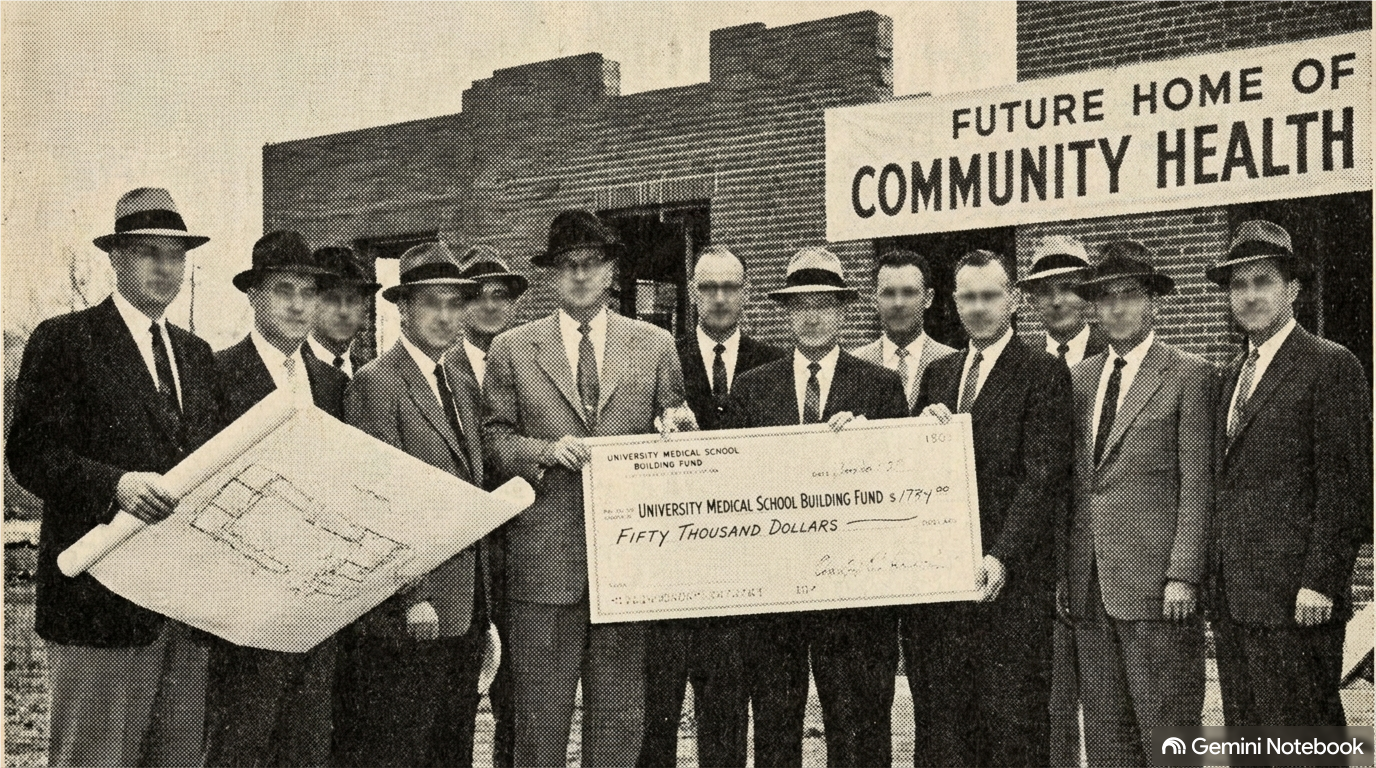
The defining milestone of this golden era—and arguably one of the most significant civic contributions in Western Australian history—was Rotary's pivotal role in establishing the University of Western Australia (UWA) Medical School. In the early 1950s, Western Australia faced a severe shortage of medical practitioners. The state possessed no local medical training facility, forcing aspiring doctors to travel to eastern states or overseas for their university education. Tragically, many of these young professionals never returned, depriving the growing state of vital medical expertise.
To commemorate the 50th Golden Anniversary of Rotary International in 1955, the Rotary Club of Perth, enthusiastically supported by clubs across the state, launched a monumental campaign to lobby the state government and rally public support for a dedicated medical school at UWA. Rotarians spearheaded a statewide public fundraising appeal that captured the imagination of the entire Western Australian community. Business leaders, mining executives, agricultural collectives, school children, and everyday citizens contributed to the cause. Against all odds, the appeal raised over £300,000—an extraordinary sum at the time—which provided the critical capital required to establish the UWA Faculty of Medicine.
Chapter Three
Evolution and Inclusivity (1980s–2000s)
The final decades of the 20th century brought profound cultural and structural transformations to Rotary in Western Australia. The organisation evolved deliberately from an exclusive association for male business executives into a vibrant, diverse, and modern service movement reflecting the full spectrum of Western Australian society.
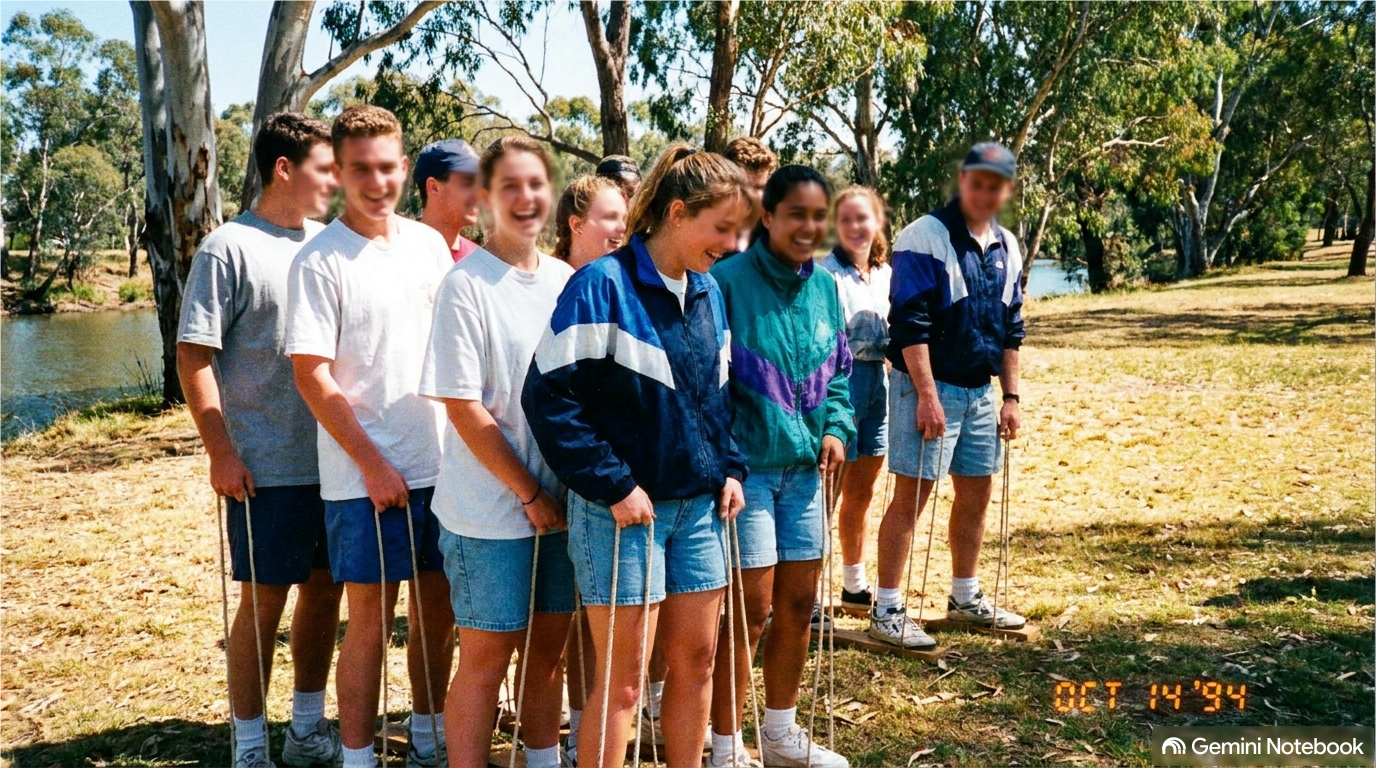
Among the most monumental structural changes during this era was the formal admission of women into Rotary membership in the late 1980s, following landmark legal rulings and constitutional amendments by Rotary International. Prior to this transition, women had made immense, invaluable contributions to community welfare through Inner Wheel clubs, Rotary Anns, and volunteer committees. The formal induction of women as full Rotarians energised clubs across Western Australia, bringing fresh perspectives, professional expertise, and dynamic leadership. Women rapidly stepped into executive roles—serving as club presidents, project directors, and District Governors—fundamentally strengthening Rotary's capacity and standing in the community.
Chapter Four
Local Actions, Global Impact
Wheelchairs for Kids Australia: A Global Humanitarian Success
The practical, problem-solving ethos of Western Australian Rotarians is best illustrated by their ability to identify pressing human needs, engineer innovative solutions, and scale grassroots efforts into massive international humanitarian operations.
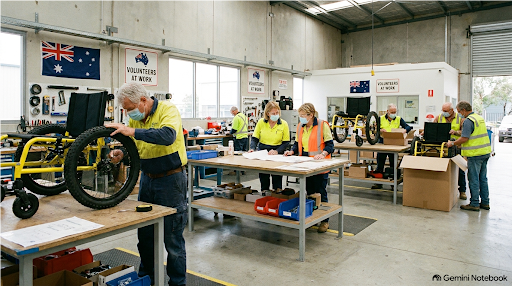
A prime example of this volunteer-driven impact is Wheelchairs for Kids Australia (WFKA). Inspired in the mid-1990s by Queensland Rotarian Des LaRance—who witnessed disabled children in Fiji dragging themselves through dirt due to a lack of mobility aids—the Rotary Club of Scarborough answered the call to action in 1996. Early prototypes made from discarded bicycle frames proved heavy and unsuitable for rough terrain. To overcome these limitations, Scarborough Rotary partnered with Brother Thomas Oliver 'Olly' Pickett, a Christian Brother running a workshop in Wangara.
The resulting 'Adjusta' model is a lightweight, growth-adjustable, rough-terrain wheelchair equipped with solid puncture-proof tyres, postural supports, a single front wheel for navigating unpaved tracks, a tool kit, a knee rug, and a soft toy. Rigorously tested by the UWA Engineering Department, the wheelchair fully complies with World Health Organisation (WHO) guidelines. Operating out of a factory in Wangara, a team of roughly 250 retired volunteers—with an average age in their mid-70s—assembles approximately 30 wheelchairs every working day. By 2026, WFKA celebrated gifting over 70,000 custom-built wheelchairs to disabled children in more than 80 under-resourced and war-torn nations, free of charge. In recognition of this extraordinary achievement, Brother Olly Pickett was named the 2025 Senior Australian of the Year.
Chapter Five
The Centenary and Beyond (2020s & 2026)
As Rotary in Western Australia approached its 100th anniversary, the organisation undertook strategic structural reforms to optimise operations and maximise community impact for its second century. Recognising that administering multiple districts created unnecessary overhead, WA Rotarians voted to unify their administrative governance. Effective 1 July 2023, District 9455 (North) and District 9465 (South) merged to form a single statewide district: District 9423, operating under the public banner of Rotary Western Australia.
Conclusion: 100 Years of Ordinary People Doing Extraordinary Things
Looking back across the century that has unfolded since those initial discussions at the King Edward Hotel on 1 September 1926, the story of Rotary in Western Australia is one of quiet dedication, visionary leadership, and lasting community impact. What began as an informal gathering of a few business acquaintances has evolved into a statewide movement that has helped shape the social, medical, and physical development of Western Australia.
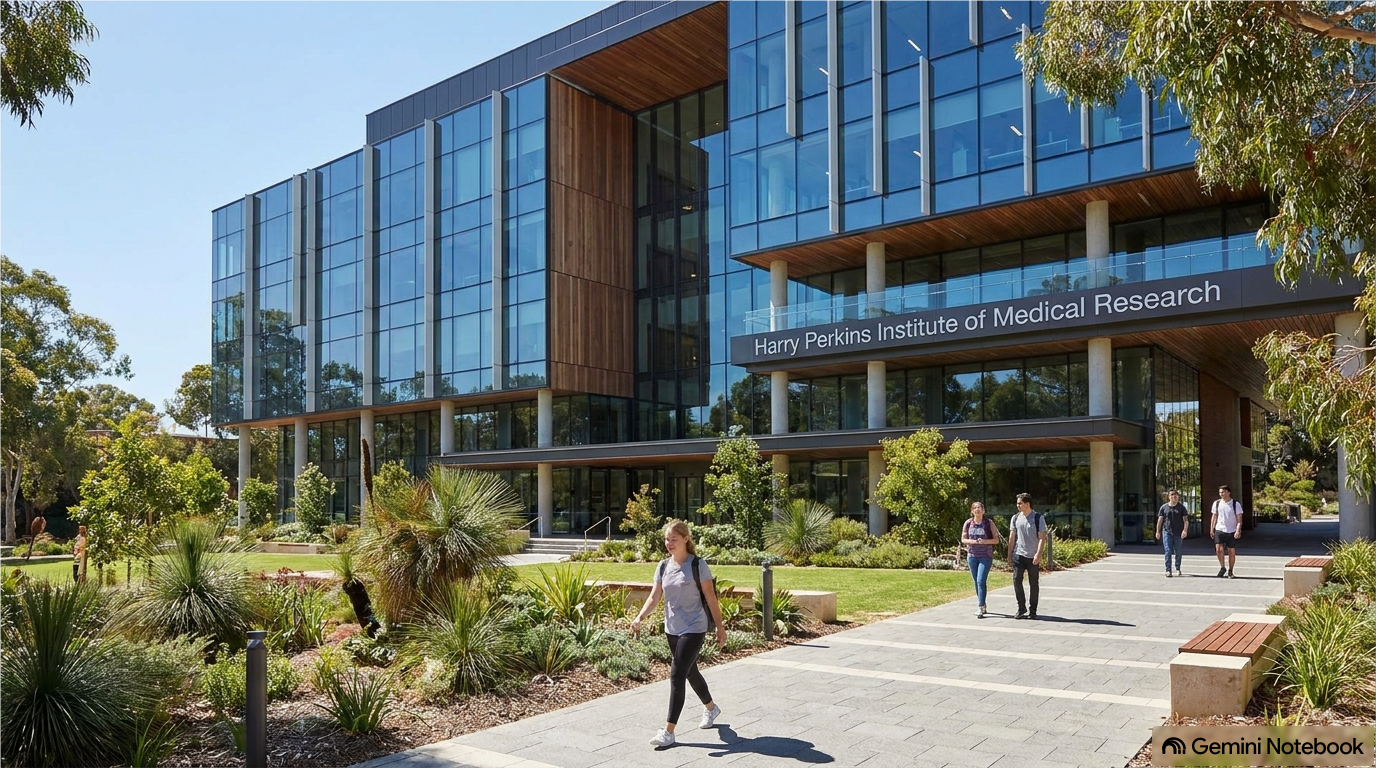
Rotary's century of service in Western Australia proves that when individuals combine their talents, resources, and vision under the banner of Service Above Self, they can solve major community challenges. From lobbying for the UWA Medical School in 1955 to shipping over 70,000 custom wheelchairs worldwide, building residential colleges for regional students, funding cord blood banks, and launching the 2026 Centenary Project at BMRIID, Rotarians have demonstrated the incredible power of volunteer-led civic action.
Directory
Appendix A: District 9423 Comprehensive Club Directory
The following directory acknowledges the expansive network of Rotary Clubs operating across District 9423 (Rotary Western Australia), uniting metropolitan and regional communities under a single statewide banner.
1. Metropolitan Perth Clubs
| Zone / Corridor | Club Name | Meeting Focus |
| Central & Western | Rotary Club of Perth (Pioneer Club) | Perth CBD |
| Central & Western | Rotary Club of West Perth | East Perth / West Perth |
| Central & Western | Rotary Club of Subiaco | Subiaco & Surrounds |
| Central & Western | Rotary Club of Dalkeith | Nedlands / Dalkeith |
| Central & Western | Rotary Club of Crawley | UWA & Crawley Precinct |
| Central & Western | Rotary Club of Cambridge | Floreat / Cambridge |
| Central & Western | Rotary Club of Claremont-Nedlands | Western Suburbs |
| Central & Western | Rotary Club of Matilda Bay | Matilda Bay / UWA |
| Central & Western | Rotary Club of Mosman Park | Mosman Park |
| Central & Western | Rotary Club of Heirisson | East Perth / Victoria Park |
| Central & Western | Rotary Club of Western Endeavour | Claremont / Nedlands |
| Northern Suburbs | Rotary Club of Karrinyup | Karrinyup / Gwelup |
| Northern Suburbs | Rotary Club of Scarborough | Scarborough Coastal |
| Northern Suburbs | Rotary Club of Osborne Park | Tuart Hill / Osborne Park |
| Northern Suburbs | Rotary Club of Wanneroo | Wanneroo & Joondalup |
| Northern Suburbs | Rotary Club of Mindarie | Mindarie Coastal |
| Northern Suburbs | Rotary Club of Hillarys | Hillarys Marina Precinct |
| Northern Suburbs | Rotary Club of Joondalup | City of Joondalup |
| Northern Suburbs | Rotary Club of Morley | Morley & Surrounds |
| Northern Suburbs | Rotary Club of Mt Lawley | Inglewood / Mt Lawley |
| Northern Suburbs | Rotary Club of Ellenbrook | Ellenbrook & Swan Valley |
| Southern & Coastal | Rotary Club of Fremantle | Fremantle Port & City |
| Southern & Coastal | Rotary Club of Melville | Alfred Cove / Melville |
| Southern & Coastal | Rotary Club of Applecross | Applecross / South Perth |
| Southern & Coastal | Rotary Club of South Perth-Burswood | South Perth Peninsula |
| Southern & Coastal | Rotary Club of Como | Como / Salter Point |
| Southern & Coastal | Rotary Club of Victoria Park | Victoria Park / Carlisle |
| Southern & Coastal | Rotary Club of Booragoon | Booragoon / City of Melville |
| Southern & Coastal | Rotary Club of Attadale | Attadale & Surrounds |
| Southern & Coastal | Rotary Club of Cockburn | Cockburn Central |
| Southern & Coastal | Rotary Club of Rockingham | City of Rockingham |
| Southern & Coastal | Rotary Club of Palm Beach | Rockingham / Palm Beach Coastal |
| Southern & Coastal | Rotary Club of Kwinana | City of Kwinana |
| Southern & Coastal | Rotary Club of Baldivis | Baldivis & Surrounds |
| Southern & Coastal | Rotary Club of Willetton | Willetton / Rossmoyne |
| Eastern Suburbs & Hills | Rotary Club of Swan Districts | Midland / Guildford |
| Eastern Suburbs & Hills | Rotary Club of Swan Valley | Swan Valley Region |
| Eastern Suburbs & Hills | Rotary Club of Midland | Midland CBD |
| Eastern Suburbs & Hills | Rotary Club of Mundaring | Perth Hills / Mundaring |
| Eastern Suburbs & Hills | Rotary Club of Kalamunda | Kalamunda / Lesmurdie |
| Eastern Suburbs & Hills | Rotary Club of Belmont | City of Belmont |
| Eastern Suburbs & Hills | Rotary Club of Ascot | Ascot / Redcliffe |
| Eastern Suburbs & Hills | Rotary Club of Kenwick | Kenwick / Maddington |
| Eastern Suburbs & Hills | Rotary Club of Gosnells | City of Gosnells |
| Eastern Suburbs & Hills | Rotary Club of Southern Districts | Canning Vale / Armadale |
2. Regional Western Australia & Virtual Clubs
| Region | Club Name | Regional Focus |
| Peel & South West | Rotary Club of Mandurah | Mandurah City |
| Peel & South West | Rotary Club of Mandurah Districts | Peel Region |
| Peel & South West | Rotary Club of Pinjarra | Murray Shire |
| Peel & South West | Rotary Club of Harvey | Harvey / Brunswick |
| Peel & South West | Rotary Club of Bunbury | City of Bunbury |
| Peel & South West | Rotary Club of Bunbury Leschenault | Greater Bunbury |
| Peel & South West | Rotary Club of Collie | Collie Shire |
| Peel & South West | Rotary Club of Collie River Valley | Collie River Region |
| Peel & South West | Rotary Club of Busselton | Busselton / Vasse |
| Peel & South West | Rotary Club of Busselton Geographe Bay | Geographe Bay |
| Peel & South West | Rotary Club of Margaret River | Augusta-Margaret River |
| Peel & South West | Rotary Club of Bridgetown | Blackwood River Region |
| Peel & South West | Rotary Club of Manjimup | Southern Forests |
| Great Southern | Rotary Club of Albany | City of Albany |
| Great Southern | Rotary Club of Albany Port | Albany Harbour Precinct |
| Great Southern | Rotary Club of Mount Barker | Plantagenet Shire |
| Great Southern | Rotary Club of Denmark | Denmark Shire |
| Great Southern | Rotary Club of Kojonup | Kojonup & Surrounds |
| Great Southern | Rotary Club of Katanning | Katanning Shire |
| Wheatbelt | Rotary Club of Northam | Avon Valley / Northam |
| Wheatbelt | Rotary Club of York | Historic York |
| Wheatbelt | Rotary Club of Quairading | Quairading Shire |
| Wheatbelt | Rotary Club of Wyalkatchem | Central Wheatbelt |
| Wheatbelt | Rotary Club of Corrigin | Corrigin & Surrounds |
| Wheatbelt | Rotary Club of Merredin | Eastern Wheatbelt |
| Wheatbelt | Rotary Club of Narrogin | Upper Great Southern |
| Wheatbelt | Rotary Club of Wagin | Wagin Shire |
| Wheatbelt | Rotary Club of Moora | Midlands / Moora |
| Mid West & Gascoyne | Rotary Club of Geraldton | City of Greater Geraldton |
| Mid West & Gascoyne | Rotary Club of Geraldton-Greenough | Greenough / Mid West |
| Mid West & Gascoyne | Rotary Club of Dongara-Denison | Irwin Shire |
| Mid West & Gascoyne | Rotary Club of Carnarvon | Gascoyne Region |
| Goldfields-Esperance | Rotary Club of Kalgoorlie | Kalgoorlie CBD |
| Goldfields-Esperance | Rotary Club of Boulder | Historic Boulder |
| Goldfields-Esperance | Rotary Club of Esperance | Esperance Region |
| Goldfields-Esperance | Rotary Club of Esperance Bay | Esperance Coastal |
| Pilbara & Kimberley | Rotary Club of Karratha | City of Karratha |
| Pilbara & Kimberley | Rotary Club of Port Hedland | Port Hedland / South Hedland |
| Pilbara & Kimberley | Rotary Club of Newman | Newman & Pilbara Inland |
| Pilbara & Kimberley | Rotary Club of Broome | Roebuck Bay / Broome |
| Pilbara & Kimberley | Rotary Club of Kununurra | East Kimberley |
| Statewide Virtual | Rotary E-Club of WA ('E-WA') | Online Zoom Platform |
| Statewide Virtual | Rotary E-Club of Western Australia | Online / Remote Volunteers |
Appendix B: Historical Photo Credits & Archival Acknowledgements
Grateful acknowledgement is extended to the State Library of Western Australia, UWA Historical Archives, Wheelchairs for Kids Australia, and the Motor Museum of Western Australia for preserving the visual history of Rotary in WA.